We teach children not what to think, but how to think.
Project Mimamsa runs a three-year inquiry program for children from rural and low-income communities across Maharashtra — because the capacity to think for oneself is one resource that poverty cannot take away.
Every child is born able to wonder, question, and reason.
What differs between children isn't that capacity — it's the chance to develop it. That's not a gap in ability. It's a gap in circumstance, and that's what makes it unjust.
One child grows up surrounded by adults who feed curiosity; another is handed a syllabus to memorise and told only to remember it. The problem is well documented — and the case for closing it is stronger than most people realise.
Mimamsa exists to put that advantage within reach of children who would otherwise be denied it — by teaching them not what to think, but how.
WHAT IS MIMAMSA
Mīmāṃsā: reflection, investigation, thinking for yourself.
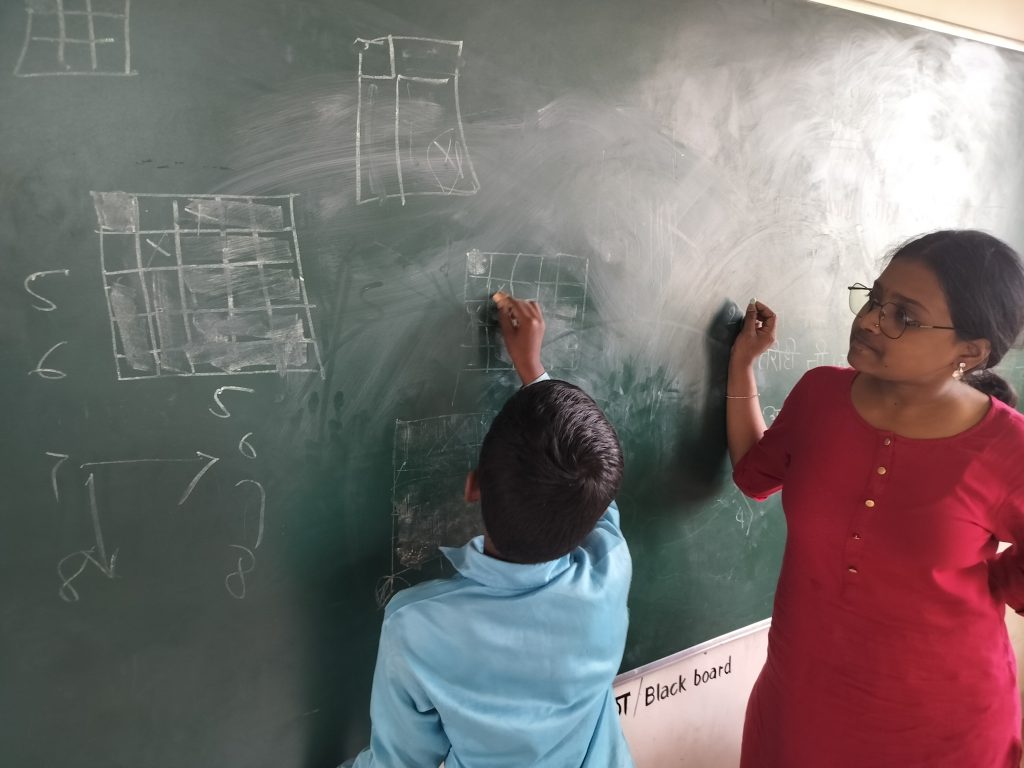
A Mimamsa session never begins with an answer to memorise. It begins with a question or a puzzle: how does a pen actually write? Is this news item true? What does it mean to be "successful"? Children reason out loud, disagree, test their ideas, and change their minds — while a facilitator guides, but never hands over the answer.
Over three years, children in Grades 6 to 8 develop the ability to observe, experiment, question and think for themselves. We work in rural and low-income communities across Maharashtra — in Pune, Beed, Palghar and Thane. Our method builds on the inquiry framework created by Dr. K P Mohanan and Dr. Tara Mohanan of thinq.education.
The capacity to think is the one gift that keeps giving itself back.
METHOD
What is Inquiry?
The full method behind every session — how it differs from rote learning, what a session actually looks like, and why it matters most for children growing up in poverty.
Read more →PROGRAMS
The full three-year program
Who it's for, how it's delivered, all eleven themes in detail, and where Mimamsa is running right now.
See programs →RESOURCES
Tools to try yourself
Materials for teachers, parents and schools who want to bring inquiry into their own classroom or home — plus further reading on the method.
Browse resources ↗What we do
A structured, three-year inquiry program for children in Grades 6 to 8, taught in the communities that need it most.
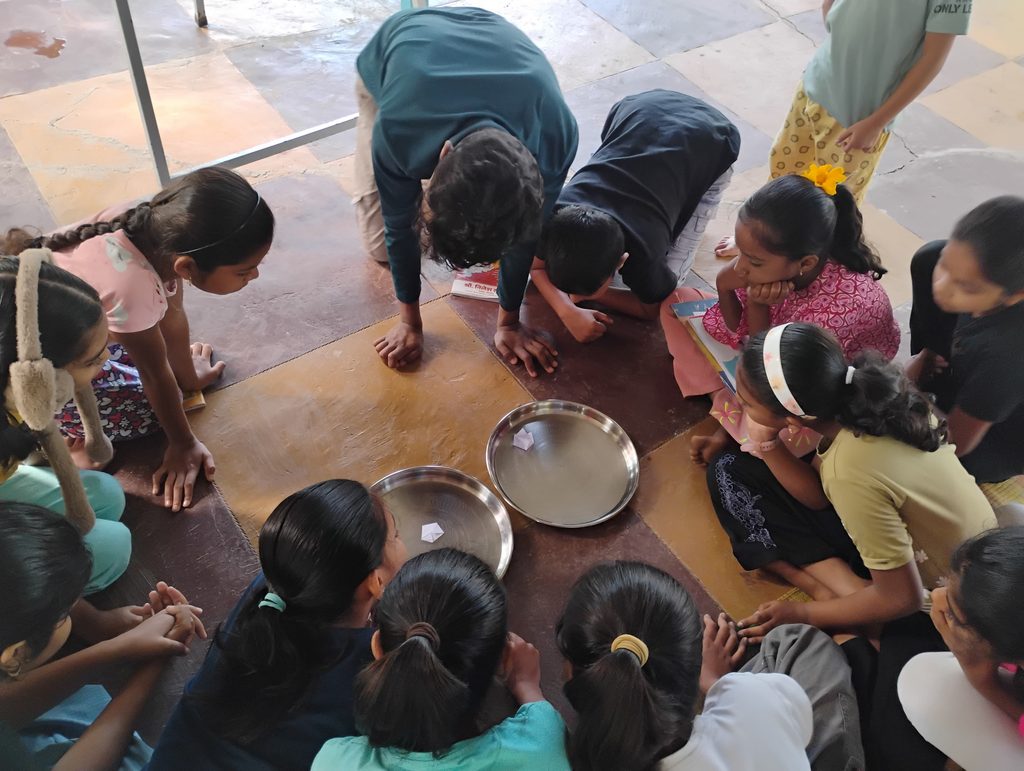
A Mimamsa session in the field.
Three-year inquiry program
Built around themes that develop reasoning, observation and independent thought — not a one-off workshop.
Taught where children already are
In slums, villages and schools serving low-income families, in partnership with local centres and NGOs.
In person, or hybrid
Daily or weekly online sessions combined with regular in-person classes, so distance doesn't decide who gets to take part.
Small groups, close attention
Sessions run with 25–30 children — small enough for every child to actually be heard.
The themes
The program moves through themes like these across three years — from how a pen writes to how to reason about right and wrong.
What changes in a child
After a single year, facilitators consistently see children who:
- observe more closely, using all their senses
- ask more questions, and ask them more precisely
- have the confidence to raise a question at all
- design sharper little experiments to test an idea
- spot patterns and notice inconsistencies
- approach a problem from several angles at once
- understand concepts, especially in science, far more deeply
These aren't exam results. They're habits of mind, and they last.
Where Mimamsa works
Five sites across Maharashtra, each shaped to the children it serves.
Khelghar, Pune
Laxminagar settlement
Grades 5–8 at this afterschool centre working with children from the Laxminagar slum community.
Swaroopvardhini, Pune
Four branches
Children from lower-income families across four branches of this Pune-based centre.
Sondara Gurukul, Beed
Domri village
Working with teachers and Grade 5–7 students at this school near the small village of Domri.
Murbad, Thane district
Vaishakhare & Chausale villages
Daily online sessions plus an in-person session every two months, for low-income Grade 6–7 students.
Wada, Palghar district
Weekly hybrid delivery
A weekly online class plus an in-person session every two months.
Find your way in
Different people come to Mimamsa for different reasons. Here's where to start.
Parents
See what your child actually does in a session, and how the same thinking can grow at home.
What is inquiry →Teachers
Explore the method and the themes, and bring inquiry into your own classroom.
See our programs →Schools & centres
Bring the three-year program to your students through a partnership.
Partner with us →Donors & supporters
Your support keeps children reasoning, questioning, and thinking for themselves.

The capacity to think is the one gift that keeps giving itself back. Help us put it within reach of more children.
There are two ways to help, and both matter: give what keeps the program running, or introduce us to children who need it. A small, steady monthly contribution is the most useful kind — it lets us plan, and keeps children learning all year.